
7 Nehemiah Leadership Lessons for Ministry and Daily Life

You're facing a project that needs more than another meeting. People are discouraged, responsibilities are unclear, and you're wondering whether to act quickly or first understand what's gone wrong. Nehemiah faced a far more serious situation when he heard that Jerusalem's walls were broken and its gates had been burned. His first response wasn't to announce a rebuilding campaign. He sat down, wept, mourned, fasted, and prayed before God (Nehemiah 1:1-4).
For ministry leaders considering deeper biblical education, these Nehemiah leadership lessons offer a practical starting point. His account moves from private prayer to careful assessment, shared responsibility, perseverance, integrity, accountability, and public renewal. Each step concerns people as well as work.
The book isn't a management manual with religious language attached. Nehemiah serves within Israel's covenant relationship with God, and his decisions reflect that setting. Christians can learn from his example without treating every ancient practice as a direct instruction for a church or workplace.
The central question is therefore broader than how to finish a difficult project. It's how to lead faithfully while caring for the people involved, telling the truth about problems, and remaining accountable to God.
Table of Contents
1. Lesson 1 Lead with Prayer and Dependence on God - Let Prayer Shape Your Preparation
2. Lesson 2 Assess the Situation Carefully Before Acting - Separate Observation from Assumption
3. Lesson 3 Cast a Clear Vision and Mobilize Shared Responsibility - Give People a Defined Part
4. Lesson 4 Persevere Under Opposition and Ridicule - Match the Response to the Risk
5. Lesson 5 Practice Integrity and Servant Leadership - Examine What Your Position Costs Others
6. Lesson 6 Confront Injustice and Hold People Accountable - Require Repair, Not Just Regret
7. Lesson 7 Lead Spiritual Renewal Through God's Word and Worship - Move from Hearing to Obedience
Turning Nehemiah's Lessons into Next Steps - Turn a Principle into a Practice
1. Lesson 1 Lead with Prayer and Dependence on God
Nehemiah's leadership begins with grief, not a proposal. After hearing the report about Jerusalem, he mourns, fasts, and prays (Nehemiah 1:4). He allows the suffering of God's people to interrupt his ordinary responsibilities.
His prayer has a clear order. He acknowledges God's covenant faithfulness, confesses Israel's sin, includes himself and his family in that confession, and asks for mercy before the king (Nehemiah 1:5-11). He doesn't place himself above the people he hopes to help.

Let Prayer Shape Your Preparation
When Artaxerxes asks what he wants, Nehemiah prays before answering (Nehemiah 2:4). The text doesn't specify whether that prayer was audible, but it clearly places dependence on God within a pressured conversation. Nehemiah then makes concrete requests rather than remaining passive.
Consider a ministry team deciding whether to restart an outreach program. Before discussing calendars, the leader can invite prayer, acknowledge past mistakes, and identify the needs the program should address. In an everyday workplace, a Christian supervisor can pray privately before a difficult conversation without pressuring colleagues to participate.
Begin with Scripture and prayer. Ask what faithfulness requires before asking what success would look like.
Name concrete needs. Pray about strained relationships, resources, decisions, and the people affected.
Confess your contribution. Admit where your own choices have worsened the problem.
Practical rule: Prayer shouldn't replace preparation, and preparation shouldn't replace dependence on God.
Nehemiah later attributes the work to God's help, both when answering opponents and when describing their response to its completion (Nehemiah 2:20; 6:16). His skill matters, but it isn't the foundation of his confidence.
2. Lesson 2 Assess the Situation Carefully Before Acting
A new leader can mistake arriving for understanding. Nehemiah doesn't. After reaching Jerusalem, he waits before inspecting the damaged walls at night, taking only a small group and the animal he rides (Nehemiah 2:11-16).
His inspection is concrete. He examines gates and broken sections, encounters an obstruction, and continues investigating before returning. Local officials don't yet know what he intends, so his public proposal follows firsthand assessment rather than preceding it.

Separate Observation from Assumption
Nehemiah investigates before he asks others to commit. A contemporary leadership analysis of Nehemiah likewise emphasizes communication, collaboration, decision-making, and attention to followers' needs. These are useful categories for application, though the biblical narrative itself describes particular actions rather than a modern management framework.
Say a church's children's ministry struggles to retain volunteers. Don't immediately assume that volunteers lack commitment. Observe the check-in process, review preparation expectations, and ask volunteers where they need support before proposing a solution.
A workplace manager can take the same approach to missed deadlines. Examine handoffs, approval delays, and conflicting assignments before deciding that employees need stronger motivation.
Gather firsthand information. Watch the work and speak with those doing it.
Record what remains uncertain. Distinguish an observed problem from your explanation for it.
Set an assessment deadline. Careful listening shouldn't become indefinite delay.
Explain your findings openly. Once you propose action, show how the evidence supports it.
Nehemiah's quiet inspection isn't permission for habitual secrecy. In Nehemiah 2:17-18, he moves from private investigation to public explanation. The application is disciplined preparation followed by credible communication.
3. Lesson 3 Cast a Clear Vision and Mobilize Shared Responsibility
Nehemiah's invitation is specific: rebuild Jerusalem's wall and address the city's disgrace. He identifies the shared problem, explains God's gracious help and the king's support, and invites the people to act together (Nehemiah 2:17-18).
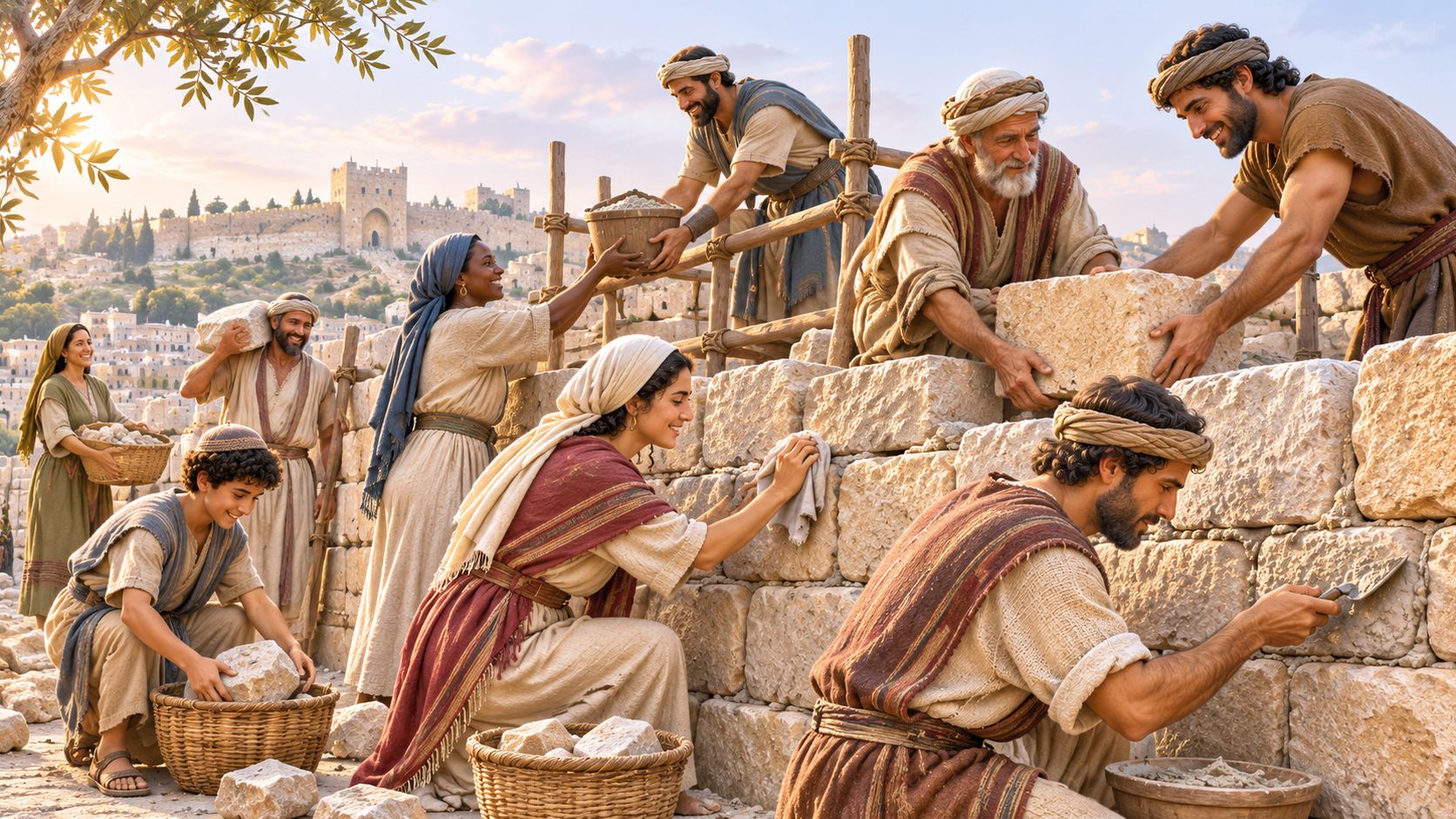
He doesn't present the community as an audience for his personal achievement. In Nehemiah 3, in the New International Version, priests, rulers, tradespeople, families, and neighboring communities undertake identifiable portions of the work. Eliashib and his fellow priests work on the Sheep Gate, while other groups accept adjoining assignments.
Give People a Defined Part
A shared vision needs specific ownership. Nehemiah 3:10, 23, and 28-30 also connects several assignments with workers' homes. The text doesn't prescribe a universal staffing method, but it does show people accepting responsibility for concrete work close to their lives.
For a church launching a community meal, a vision statement alone won't prepare food or welcome guests. Assign named owners for purchasing, food preparation, hospitality, safeguarding, and cleanup, then explain how those responsibilities fit together.
In a workplace, use the same principle when introducing a new customer-support process. Identify who drafts procedures, who trains colleagues, and who checks that unresolved requests reach the right person.
State the outcome plainly. Describe what people will be able to see or experience when the work is complete.
Name accountable owners. Shared involvement shouldn't leave essential tasks unclaimed.
Clarify handoffs. Explain what each person needs from others.
Recognize contributions. Celebrate completed work without overlooking less visible service.
Nehemiah 3 preserves names and assignments rather than crediting the entire project to its principal leader. That detail challenges leaders to notice who carries the work.
4. Lesson 4 Persevere Under Opposition and Ridicule
Tobiah's mockery attacks the quality of the rebuilding. Other opposition questions the project's political legitimacy, and later threats raise the possibility of physical attack (Nehemiah 2:19; 4:1-8). These aren't identical problems, so Nehemiah doesn't treat them identically.
The BiblicalTraining account of Tobiah traces this escalation from ridicule and accusation to an organized threat. Nehemiah's response combines prayer with guards, defensive preparations, and continued work (Nehemiah 4:9, 13-16). He also directs the people to remember the Lord and the families they are protecting (Nehemiah 4:14).
Perseverance means continuing faithfully while responding honestly to danger. It doesn't mean pretending danger is absent.
Match the Response to the Risk
Nehemiah arranges builders and defenders, keeps a trumpeter beside him, and explains how workers should gather if an attack occurs (Nehemiah 4:16-20). He gives people an operating plan, not encouragement alone.
For a ministry receiving hostile messages, distinguish criticism from harassment and credible threats. Answer legitimate questions, preserve concerning communications, and follow safeguarding procedures when someone may be at risk. Don't label every disagreement opposition to God.
A workplace team changing an established process needs similar discernment. An employee raising a genuine safety concern isn't equivalent to someone deliberately spreading false information.
Identify the actual issue. Is it disagreement, misinformation, intimidation, or a safety threat?
Assign a response owner. Make sure concerns reach someone authorized to act.
Keep necessary work moving. Don't require the whole team to answer every criticism.
Communicate protective measures. People should know how to request help.
Nehemiah's defensive measures belong to an ancient rebuilding crisis. Modern churches and workplaces should apply the principle of prudent protection, not transfer his armed arrangements directly into ordinary disputes.
5. Lesson 5 Practice Integrity and Servant Leadership
Would you surrender a legitimate benefit if accepting it would increase the burden on people you serve? Nehemiah presents that question through his own conduct as governor. His twelve-year governorship, described in Nehemiah 5:14 and discussed in Bible Hub's historical overview, shows that his responsibility extended beyond a brief construction campaign.
Nehemiah explains that he declined the governor's food allowance because the people were already heavily burdened. He contrasts his conduct with earlier governors and identifies the fear of God as his reason for acting differently (Nehemiah 5:14-15, 18).
Examine What Your Position Costs Others
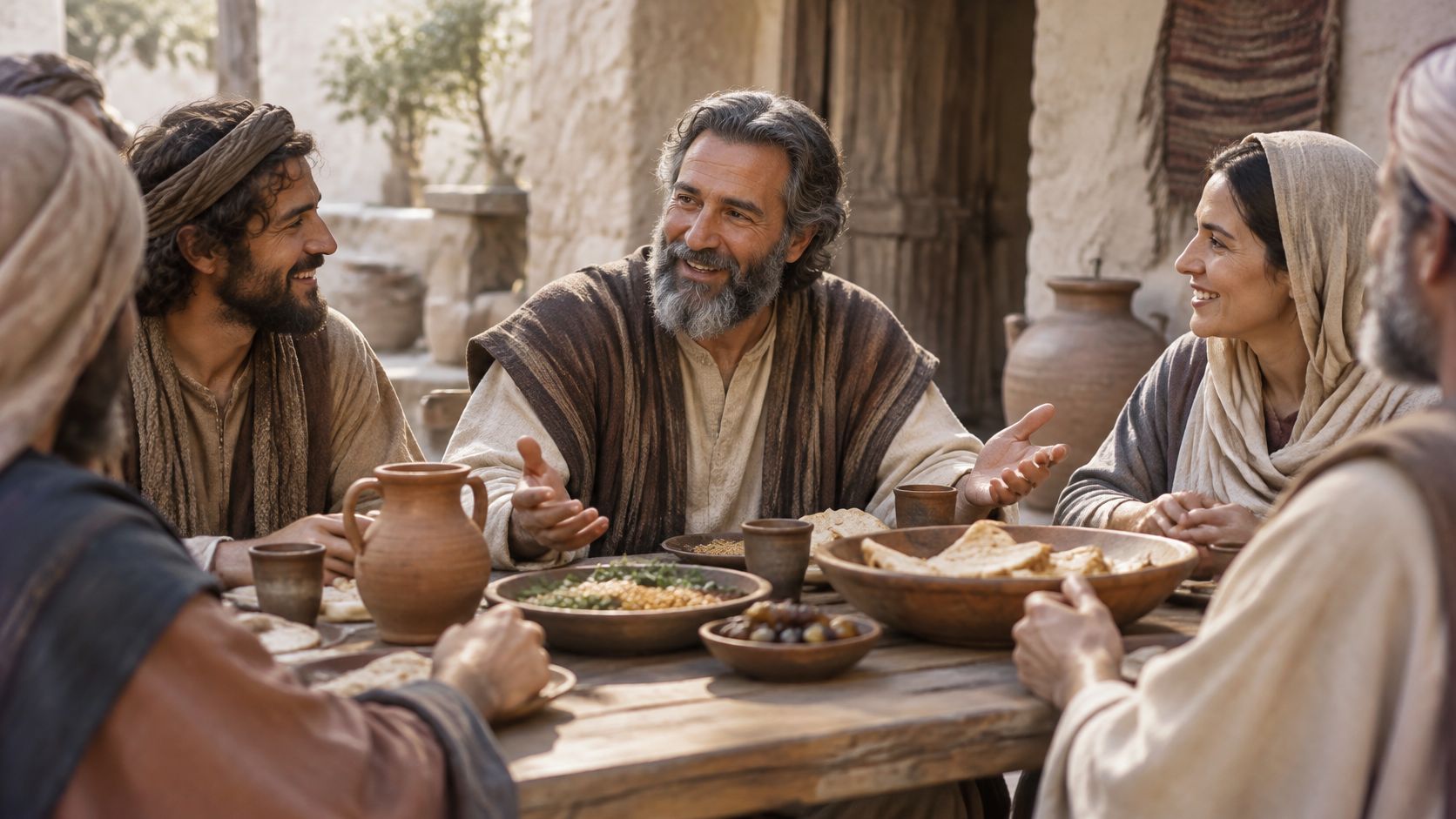
He also describes working on the wall, refraining from acquiring land, and providing hospitality at his table (Nehemiah 5:16-18). His table included 150 Jewish people and officials, besides visitors from surrounding nations, according to Nehemiah 5:17. His authority created opportunities to serve rather than merely to receive.
For a ministry leader, this might mean reviewing reimbursement practices, declaring a financial conflict, or refusing an exception that shifts work onto volunteers. A workplace supervisor might share an unpopular assignment instead of always passing it to junior employees.
The Bible Seminary's discussion of a theology of leadership provides a relevant avenue for considering leadership as a theological responsibility rather than a collection of techniques.
Integrity test: Ask who carries the cost of your convenience.
Nehemiah's example doesn't establish that faithful leaders must reject compensation. The issue is exploitation, not whether leaders have legitimate needs. Apply the passage by examining benefits, explaining financial decisions, and making sure personal sacrifice doesn't become an excuse to neglect your family or demand unpaid overwork from others.
6. Lesson 6 Confront Injustice and Hold People Accountable
The rebuilding community faces an internal crisis as well as external threats. Families report food shortages, mortgaged property, debts connected with taxation, and children subjected to servitude (Nehemiah 5:1-5). Nehemiah becomes angry, considers the matter, confronts nobles and officials, and calls an assembly (Nehemiah 5:6-7).
He requires concrete restitution, including the return of fields, vineyards, olive groves, and houses, along with the charges being exacted. The officials agree, and Nehemiah brings priests into the process so that their commitment carries public accountability (Nehemiah 5:10-13).
Require Repair, Not Just Regret
A Regent University paper on trauma-informed leadership interprets Nehemiah's work as restoration that includes social, moral, and spiritual needs. That is a contemporary interpretive lens, not terminology the biblical text uses. It helpfully directs attention to a plain feature of the account: Nehemiah doesn't excuse exploitation because the project matters.
If a ministry discovers that workers haven't received agreed reimbursements, a general apology isn't enough. Establish what is owed, arrange repayment, correct the approval process, and verify completion. In a workplace, address unfair workload distribution by changing assignments and reviewing whether the change occurred.
Establish the facts. Hear affected people before accepting the explanation of those with authority.
Name the wrong clearly. Avoid language that conceals responsibility.
Specify corrective action. Identify who must do what.
Return to the issue. An agreement isn't the same as completed repair.
Later, Nehemiah 13 describes neglected support for Levites, Sabbath trading, and marriages that threatened covenant faithfulness (Nehemiah 13:10-30). These belong to Israel's covenant setting, not a direct modern employment policy or a basis for ethnic prejudice. The transferable lesson is persistent accountability, not uncritical imitation of every ancient corrective action.
7. Lesson 7 Lead Spiritual Renewal Through God's Word and Worship
The completion of the wall isn't the end of the community's need. Nehemiah 6:15, in the King James Version, records its completion in 52 days. That duration belongs to the biblical account and shouldn't be presented as an independently verified archaeological construction schedule.
In Nehemiah 8:1, the people ask Ezra to bring the Book of the Law of Moses. Ezra reads publicly, and the Levites help the people understand what they hear (Nehemiah 8:3-8). Leadership here includes gathering, reading, explaining, and helping people respond.
Move from Hearing to Obedience
The people weep, but Nehemiah, Ezra, and the Levites direct them toward celebration and sharing with those who have nothing prepared (Nehemiah 8:9-12). The familiar statement about the Lord's joy being their strength belongs within that communal response to God's Word. It isn't a command to suppress grief.
The renewed observance of the Feast of Booths then connects understanding with action (Nehemiah 8:13-18). The goal is more than an informed audience. People respond through worship, generosity, and obedience.
For a Bible study coordinator, a practical application is to read a passage aloud, explain its context, invite questions, and identify an appropriate response. Don't rush from a favorite sentence to advice without establishing what the passage means.
Read the text clearly. Let participants hear Scripture itself.
Explain unfamiliar details. Clarify speakers, setting, and covenant context.
Invite a concrete response. Connect understanding with faithful practice.
Leave room for joy. Correction and encouragement belong together.
A Christian in an everyday workplace can apply this lesson through personal obedience and voluntary study outside required meetings. Nehemiah's public Scripture gathering concerns a covenant community; it doesn't authorize managers to compel religious participation from employees.
How the seven Nehemiah leadership lessons compare
Item | Key Passages | Leadership Focus | Main Caution |
|---|---|---|---|
Lesson 1: Lead with Prayer and Dependence on God | Nehemiah 1:4–11; 2:4; 2:20; 6:16 | Pray before and throughout action; depend on God while planning | Prayer should not replace practical planning; sustained prayer takes discipline |
Lesson 2: Assess the Situation Carefully Before Acting | Nehemiah 2:11–17 | Inspect conditions, gather facts, and communicate at the right time | Excessive delay can stall momentum; secrecy may invite suspicion |
Lesson 3: Cast a Clear Vision and Mobilize Shared Responsibility | Nehemiah 2:17–18; chapter 3 | Share a clear vision and assign meaningful roles across the community | Uneven work and quality require ongoing coordination |
Lesson 4: Persevere Under Opposition and Ridicule | Nehemiah 2:19; 4:1–20; 4:22–23 | Combine prayer, preparedness, encouragement, and steady focus | Constant alertness can cause fatigue; engaging every critic can distract |
Lesson 5: Practice Integrity and Servant Leadership | Nehemiah 5:14–18 | Lead by example, serve generously, and avoid exploiting authority | Sacrifice without rest or boundaries can lead to burnout |
Lesson 6: Confront Injustice and Hold People Accountable | Nehemiah 5:1–13; 13:15–30 | Address wrongdoing directly and require concrete remedies | Confrontation can strain relationships; reforms need follow-up |
Lesson 7: Lead Spiritual Renewal Through God's Word and Worship | Nehemiah 8:1–18 | Teach Scripture clearly and guide the community toward worship and obedience | Renewal may fade without ongoing teaching and practice; interpretation requires care |
Turning Nehemiah's Lessons into Next Steps
Choose a lesson to practice this month rather than trying to reproduce Nehemiah's entire assignment. Your next step might be scheduled prayer before a difficult decision, a written assignment of responsibilities, or a public reading of Scripture with careful explanation. Make the action specific enough that you can tell whether you followed through.
Start with the people affected. If your team is exhausted, another ambitious initiative may not be the most faithful response. If someone has been treated unjustly, resolve that wrong rather than using a new vision to redirect attention.
Turn a Principle into a Practice
A ministry team preparing an outreach event could begin by praying and reviewing what participants need. The leader could then assign responsibilities, establish how concerns will be reported, and schedule a review after the event. That application follows the movement of Nehemiah's account without pretending that an outreach event is equivalent to rebuilding Jerusalem.
A workplace leader might focus on integrity instead. Review a decision that benefits you but burdens colleagues, explain the reasoning openly, and change the arrangement if it's unfair. The important question isn't whether others recognize you as a servant leader, but whether you serve them.
For prospective theology students, the deeper next step is learning to interpret Scripture before turning it into leadership advice. Practice distinguishing what the text says, what it meant in its historical setting, and how Christians may faithfully apply it today. Keep prayer, close reading, theological reflection, and practical responsibility together.
The Bible Seminary's commitments to the Lordship of Christ, the Bible as God's fully true Word, prayer, the local church, community, and compassion provide a relevant setting for that pursuit. Our community includes more than 50 professionals who serve as mentors and visiting teachers. Structured biblical education can help you examine difficult passages with greater care rather than relying only on memorable leadership slogans.
Nehemiah's example ultimately directs attention beyond completed work. He prays, investigates, organizes, protects, confronts wrongdoing, and joins others in renewal through God's Word. Choose the step your circumstances require, take it faithfully, and invite someone trustworthy to help you assess the result.
We offer Bible-centered graduate education, certificate programs, auditing options, and on-demand seminars for people seeking deeper understanding of Scripture and ministry. To build on these Nehemiah leadership lessons, visit The Bible Seminary to explore courses and seminars and identify a fitting next step in your biblical education.