
8 Practical Ministry Skills Every Leader Needs in 2026

You've agreed to lead the Bible study, but your notes still feel like disconnected observations. A grieving family needs a visit, and you're unsure what to say. Meanwhile, a disagreement between volunteers has become a conversation you keep postponing.
You love the Lord and want to serve His people faithfully. Yet willingness doesn't automatically teach you how to explain a passage, sit beside someone in pain, or address tension without making it worse. Calling matters, and God equips His people through learning, correction, prayer, and practice.
Practical ministry skills help you put biblical convictions into faithful action. They aren't substitutes for spiritual maturity, and they don't guarantee an easy ministry. They give you ways to serve with greater clarity, compassion, and accountability.
Faithful preparation joins what you believe, who you're becoming, and how you serve.
The need is concrete. A 2024 study reported by Faith & Leadership, involving 41 clergy leaders, identified preparation gaps in administration and management, technology, leadership soft skills, counseling and pastoral care, and facilities management.
At The Bible Seminary, we unite scholarship, spiritual formation, and hands-on ministry, training hearts and minds for kingdom service. Whether you're preparing for pastoral ministry or growing as a volunteer, these eight skills offer a starting place. Each has a biblical foundation, a ministry application, and a training path you can begin following.
1. Expository Bible Teaching and Preaching
Expository teaching explains what a biblical passage means in context and applies that meaning faithfully. The biblical author's message sets the agenda, not the teacher's favorite topic. Historical background, literary structure, grammar, and the passage's place in Scripture all matter.
Nehemiah 8:8 describes the reading of God's law with explanation so the people could understand. That's a helpful model for preaching and Bible teaching: make the text understandable without replacing it with your own ideas.
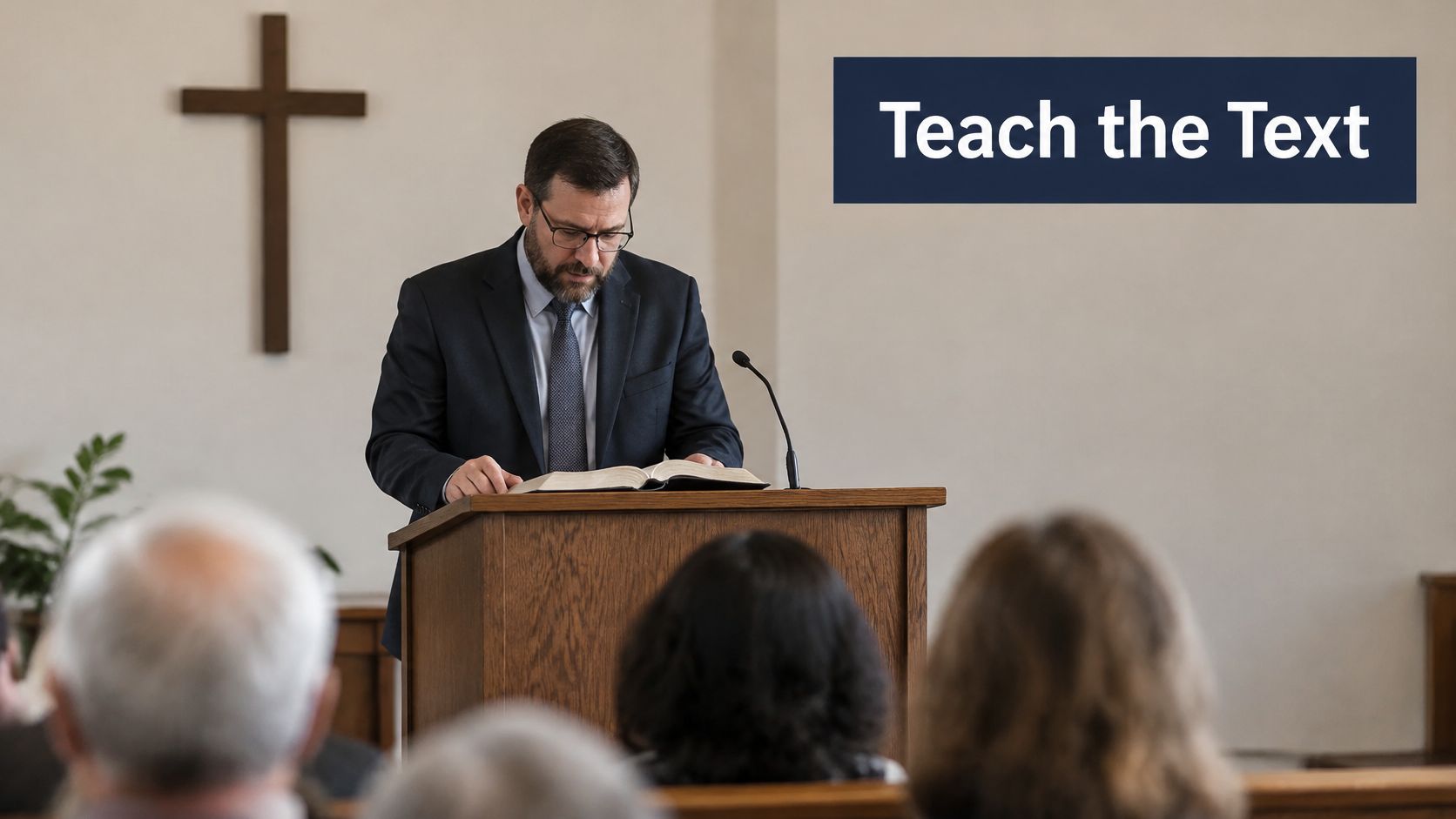
Say you're teaching Philippians to members facing family strain and financial uncertainty. Explain Paul's imprisonment and his confidence in Christ before discussing their circumstances. Don't turn his joy into a promise that faithful believers won't experience distress.
Develop the Skill Through Supervised Teaching
Prepare a short teaching from a complete passage, then deliver it to a mentor or ministry team. Ask them to evaluate accuracy, clarity, and application, not whether you sounded confident.
Identify the main point. Summarize the author's message in a sentence before building your outline.
Trace the context. Read the surrounding material and distinguish commands, descriptions, promises, and illustrations.
Apply with care. Name a concrete response that follows from the passage rather than attaching unrelated advice.
Responsible preparation also means handling historical evidence humbly. The Khirbet el-Maqatir excavation report distinguishes occupation phases rather than treating every discovery as evidence for the same event.
Archaeology can illuminate the biblical world, but it shouldn't carry claims stronger than the findings support. Likewise, commentaries and digital tools can assist preparation, but they can't replace your careful reading, theological judgment, or prayer for listeners.
2. Public Reading of Scripture
A congregation can hear every word you read and still struggle to follow the passage. Rushed delivery, unfamiliar names, and misplaced emphasis can obscure the meaning. Public reading of Scripture deserves preparation, not an announcement made while walking toward the microphone.
Paul placed this practice alongside exhortation and teaching in his instructions to Timothy:
“Until I come, devote yourself to the public reading of Scripture, to exhortation, to teaching.”1 Timothy 4:13, ESV
The reader serves the text and the congregation. You don't need a theatrical voice, but you do need to understand what you're reading and make it audible.
Rehearse for Understanding, Not Performance
Suppose a newer church member agrees to read a passage during worship. Pair that person with an experienced reader who can explain the passage, check pronunciation, and rehearse in the actual worship space. A sound check can reveal problems that quiet practice at home won't catch.
Mark natural pauses. Let sentences and changes in thought guide your breathing.
Check unfamiliar names. Practice them until you can read without apologizing or stopping.
Confirm accessibility. Identify the passage clearly and coordinate with whoever prepares projected text.
Invite specific feedback. Ask whether listeners could hear, follow, and understand the reading.
Read slowly enough for comprehension without flattening the passage's emotion. Avoid adding dramatic emphasis that suggests an interpretation the text doesn't support.
Our reflection on public reading of Scripture in the Bible offers biblical context for this shared practice.
This video provides another opportunity to consider Scripture-centered listening.
A prepared reader helps the gathered church attend to God's Word. Treat that responsibility as ministry, even when you aren't delivering the sermon.
3. Pastoral Care and Visitation
When you enter a hospital room, your first responsibility isn't to explain suffering. It's to attend to the person before you. Pastoral care combines compassionate presence, careful listening, prayer, and appropriate action.
James 1:27 connects faithful devotion with caring for vulnerable people in their distress. Visitation puts that concern into practice in homes, hospitals, care facilities, and other settings where people may feel forgotten.
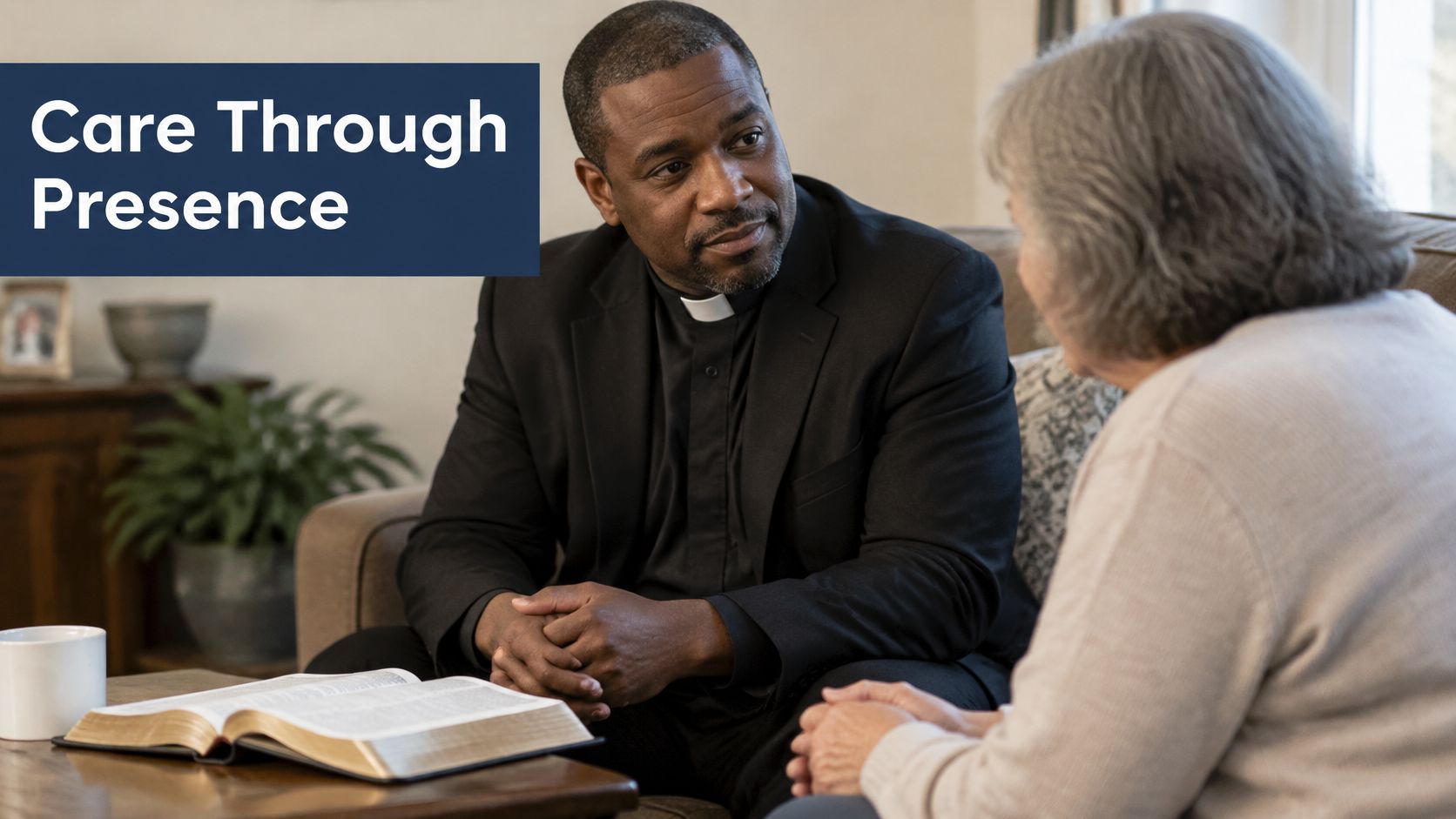
Consider a family waiting for a difficult diagnosis. Ask whether they'd welcome company, listen without pressing for details, and offer prayer with permission. Before leaving, clarify whether they want help arranging meals or communicating with church leadership.
Learn Presence and Boundaries Together
Begin by accompanying an experienced caregiver, with the recipient's permission. Afterward, discuss what helped, what felt intrusive, and what follow-up is appropriate, while protecting confidentiality.
Practice open questions such as asking what feels hardest today or what support would be useful. Don't fill every silence or offer a confident explanation for why God has allowed someone's suffering.
Keep commitments. Record agreed follow-up in an approved, secure system.
Know your limits. Coordinate qualified medical or mental-health support when someone needs care beyond your competence.
Explain confidentiality. Don't promise secrecy when safety concerns or reporting duties may require action.
Caregivers also need support. In a Barna survey conducted in March 2022, 42% of U.S. Protestant senior pastors said they'd considered quitting full-time ministry within the previous year.
That finding doesn't prescribe a solution for every leader. It does warrant honest conversations about workload, rest, supervision, and help. Being available to others doesn't mean being endlessly available.
4. Disciple-Making and Mentoring
Disciple-making helps people learn to trust, obey, and follow Jesus, not merely complete Christian material. In Matthew 28:18–20, Jesus commissions His followers to make disciples and teach obedience to His commands. Paul's instruction in 2 Timothy 2:2 adds a multiplying pattern: entrust truth to faithful people who can teach others.
Mentoring gives that work a relational setting. You read Scripture, pray, discuss decisions, and help someone connect belief with daily conduct.

A ministry leader might mentor a newer believer who's navigating workplace pressure. Rather than supplying an answer to every dilemma, the mentor helps that believer examine Scripture, seek wise counsel, and take responsibility for faithful decisions.
Build a Relationship That Encourages Maturity
Agree on a meeting rhythm, a manageable reading plan, and appropriate expectations. Ask what the person hopes to learn, where obedience feels difficult, and how you can pray.
A useful training path is to participate in mentoring yourself, observe a mature leader, and then begin a supervised mentoring relationship. Discuss boundaries, confidentiality, and when to involve church leadership before difficult situations arise.
Discuss lived obedience. Ask how the previous conversation affected an actual choice.
Model humility. Acknowledge your limitations without making the relationship revolve around your struggles.
Encourage wider community. Connect the person with congregational worship, service, and other mature believers.
Mentoring can become dependency when every decision requires the mentor's approval. The aim is growing maturity under Christ, not loyalty to you.
Expect uneven progress. A person may understand a doctrine before learning to live consistently with it. Patient encouragement and honest accountability belong together, and neither requires you to control the outcome.
5. Evangelism and Gospel Conversation
A coworker asks why you still pray during a difficult season. You have an opening for gospel conversation, but you don't need to force a complete presentation before the person finishes speaking. Listen, answer sincerely, and ask whether they'd like to hear more.
Evangelism means communicating the good news of Jesus Christ and inviting people to repent and trust Him. Romans 1:16 identifies the gospel as God's power for salvation. Your confidence rests in Christ and His message, not in finding an irresistible conversational technique.
Practice Clarity Without Pressure
Philip's encounter with the Ethiopian official in Acts 8:26–38 offers a helpful example. He listens to what the man is reading, responds to his question, and explains the good news about Jesus from Scripture. He doesn't ignore the person's actual point of confusion.
Prepare by explaining the gospel aloud to a mature believer who can identify missing elements or unclear religious language. Include humanity's sin, Christ's death and resurrection, and the call to repentance and faith. Your testimony can illustrate God's grace, but it shouldn't replace the gospel itself.
Speak clearly about Christ while treating the person before you as a neighbor to love, not an outcome to secure.
For practical evangelism training, rehearse conversations involving honest objections. Practice saying you don't know when you lack an answer, then arrange a thoughtful follow-up rather than improvising certainty.
Ask permission. Find out whether someone welcomes a deeper faith conversation.
Explain unfamiliar words. Don't assume everyone understands sin, grace, or repentance.
Follow through. Offer to read a Gospel together or continue the conversation.
Respect a person's refusal without withdrawing ordinary kindness. Faithful witness depends on the Holy Spirit, and it never requires manipulation, exaggerated testimony, or promises that following Jesus will remove hardship.
6. Leading Small Groups and Bible Study
A small group leader isn't a lecturer with a smaller audience. Your task is to help people engage Scripture, care for one another, and respond faithfully. That requires preparation and facilitation, including knowing when to stop talking.
Acts 2:42–47 describes believers devoted to the apostles' teaching, fellowship, shared meals, and prayer. A healthy group keeps those concerns connected rather than treating Bible study as either an academic exercise or an unstructured social gathering.

Suppose your group is studying James and a confident participant answers every question. Thank that person, then invite others to contribute without embarrassing anyone. Give quieter members room to respond, but don't pressure them to disclose personal struggles.
Move From Observation to Faithful Response
Prepare questions that follow the passage's movement. Ask what the author says, why it matters in context, and what faithful obedience could look like. Avoid questions designed merely to make people guess your preferred wording.
Develop this skill through an apprenticeship: observe a capable leader, facilitate part of a gathering, then lead with feedback. Ask your mentor to watch how you handle silence, disagreement, and transitions into prayer.
Stay text-centered. Ask participants where they see support for an interpretation.
Make uncertainty safe. Record unresolved questions and investigate them rather than bluffing.
Close with application. Invite a response that follows from the passage without demanding public disclosure.
For online or hybrid groups, send the passage beforehand and check that remote participants can hear. Use approved communication channels, and don't circulate sensitive prayer requests without permission.
Group warmth and theological clarity aren't competing priorities. You can welcome honest questions while gently correcting interpretations that don't fit the text.
7. Conflict Resolution and Reconciliation
Before addressing a disagreement, distinguish a difference in preference, a misunderstanding, sinful conduct, and a safety concern. They don't all require the same response. Treating every disagreement as rebellion can wound people; treating serious harm as a personality clash can leave them unprotected.
Matthew 18:15–17 addresses confronting sin within the believing community. Ephesians 4:2–3 calls Christians to humility, patience, and diligent pursuit of unity. Neither passage authorizes leaders to suppress concerns for the sake of appearances.
Rehearse Difficult Conversations Before Leading Them
Say a hospitality coordinator and a worship leader disagree about access to the sanctuary before a service. Begin by clarifying the practical issue and hearing each person's concerns. Separate assumptions about motives from observable actions, then agree on responsibilities and communication.
Practice this process through role-play with a mentor. Take turns raising a concern, summarizing the other person's account, acknowledging your own contribution, and proposing a next step.
Describe behavior. Explain what happened and its effects without attacking character.
Check understanding. Restate what you heard and invite correction.
Agree on follow-up. Clarify who will do what and when you'll review it.
Use appropriate oversight. Involve a neutral leader when you can't proceed constructively.
Safeguarding comes first. Don't require someone reporting abuse to confront the alleged abuser privately as a condition of receiving help.
Reconciliation also requires truthful expectations. Forgiveness doesn't automatically restore trust, access, or fitness for leadership.
Acts 15:36–41 records a sharp disagreement between Paul and Barnabas, not a completed reconciliation scene. Scripture's honesty should keep us from promising that every faithful conversation will produce immediate agreement. Seek peace without manufacturing a tidy ending or concealing unresolved harm.
8. Servant Leadership and Ministry Team Building
Servant leadership equips others to serve rather than making the church dependent on its most capable person. Jesus grounds leadership in service in Mark 10:42–45. His example rules out both self-importance and the assumption that a faithful leader must personally handle everything.
Acts 6:1–7 shows the apostles responding to neglected widows through shared responsibility. They don't dismiss practical care as unspiritual. They organize it while protecting attention to prayer and the ministry of the Word.
Delegate Responsibility With Support
Suppose you're forming a visitation team. Recruiting kind volunteers isn't enough. Define appropriate visits, confidentiality expectations, safeguarding procedures, and situations that require pastoral involvement.
Let a trainee observe, serve alongside an experienced person, and then take responsibility with supervision. Delegation without authority frustrates people; authority without preparation exposes them and others to avoidable harm.
Clarify the role. Write down responsibilities, limits, and the person who provides support.
Match gifts and capacity. Ask about availability rather than assuming enthusiasm means unlimited time.
Review workload. Remove unnecessary tasks and prepare someone who can cover an absence.
Operational training belongs here too. In a 2025 survey reported by Religion Unplugged, 86% of participating U.S. churches used church-management software.
Train volunteers to use approved systems, limit access to member information, and keep sensitive care details out of general messaging threads. If you use AI for routine drafts, check accuracy and theology, establish disclosure expectations, and never enter confidential pastoral information into an unapproved tool.
Tools can support coordination; they can't assume pastoral responsibility. A strong team knows its purpose, understands its boundaries, and receives encouragement before exhaustion or mistakes force a conversation.
Practical Ministry Skills at a Glance
Item | Primary Setting | Key Passage | Best For |
|---|---|---|---|
Expository Bible Teaching and Preaching | Church services and Bible studies | Nehemiah 8:8 | Teaching Scripture in context and applying it clearly |
Public Reading of Scripture | Congregational worship and group gatherings | 1 Timothy 4:13 | Helping communities hear and engage with Scripture |
Pastoral Care and Visitation | Homes, hospitals, and care facilities | James 1:27 | Supporting people through distress and life changes |
Disciple-Making and Mentoring | Ongoing one-to-one or small-group relationships | Matthew 28:19–20; 2 Timothy 2:2 | Fostering spiritual growth and preparing people to disciple others |
Evangelism and Gospel Conversation | Everyday relationships and community outreach | Matthew 28:18–20; Romans 1:16 | Sharing the gospel clearly and respectfully |
Leading Small Groups and Bible Study | Homes and church-based small groups | Acts 2:42–47 | Guiding shared Bible study, prayer, and fellowship |
Conflict Resolution and Reconciliation | Church relationships and ministry teams | Matthew 18:15–17; Ephesians 4:2–3 | Addressing disagreements and pursuing reconciliation |
Servant Leadership and Ministry Team Building | Church teams and congregational ministry | Mark 10:45; Acts 6:1–7 | Equipping others and sharing ministry responsibilities |
Start Developing Your Ministry Skills Today
You don't need to master every practical ministry skill before taking a faithful step. You do need a willingness to learn, receive correction, and keep returning to Scripture. Prayer, practice, and Christian community matter more than appearing naturally gifted.
Choose a skill that connects with a responsibility you already carry. If you're leading a Bible study, ask someone to evaluate your questions and applications. If you're joining a care team, arrange supervised visits before serving alone.
Make Your Next Step Observable
Replace a broad intention such as becoming a better leader with something another person can help you assess. Prepare a passage, rehearse a difficult conversation, or write a clear volunteer role description. Ask a mentor what you handled faithfully and what needs attention.
Name the responsibility. Identify where people currently depend on your service.
Choose a training relationship. Invite a mature leader to observe and give specific feedback.
Protect spiritual formation. Schedule prayer, Scripture meditation, rest, and honest conversation alongside ministry tasks.
That final commitment isn't separate from preparation. In Barna's comparison of pastors considering departure with those who weren't, 24% of those considering departure strongly agreed that spiritual formation had taken a back seat to pastoral duties, compared with 8% of those not considering departure. The finding doesn't establish a simple cause, but it makes neglect worth addressing.
Connect Biblical Learning With Supervised Practice
At The Bible Seminary in Katy, Texas, we're committed to equipping leaders to impact the world for Christ through Bible-based, Christ-centered, Spirit-led, ministry-focused preparation. Our community and faculty-guided learning bring scholarship, spiritual formation, and hands-on ministry together. Graduate students receive mentored learning throughout their degree programs, including local mentoring and training opportunities.
Our Master of Divinity requires a 3-year study of all 66 books of the Bible and 84 credit hours. The Certificate of Theological Studies offers 27 credit hours of graduate-level education for vocational or volunteer leaders. Dual Degree Completion pairs a Bachelor of Arts in Christian Studies with a TBS MA or MDiv.
This preparation connects careful biblical study with service in local churches and across cultures. Our commitment to archaeology and Scripture together also encourages historical understanding without overstating what a discovery establishes.
Your next step doesn't have to be impressive. It needs to be faithful, supported, and open to growth. The aim is to serve Christ's people with increasing wisdom while continuing to depend on Christ yourself.
At The Bible Seminary, we offer Bible-centered education that connects theological study, spiritual formation, and practical ministry preparation. Visit The Bible Seminary to explore our degree programs and begin your journey toward deeper biblical training.