
Exodus 4 Commentary: A Guide to Moses' Calling and Our Own

Exodus 4 is one of those chapters that grabs you. It’s a pivotal moment, not just for Moses, but for all of redemptive history. Here, we see a reluctant shepherd on the backside of the desert transformed into the chosen deliverer of God’s people. This chapter is packed with profound truth about God’s character, our own human frailties, and what a divine calling really looks like.
This Exodus 4 commentary will walk you through Moses’ objections, God’s powerful response, and the timeless lessons on leadership buried in this incredible story.
Exploring the Call of a Reluctant Leader
Here at The Bible Seminary, we believe Scripture comes alive when we dig into it, training both hearts and minds for kingdom service. Exodus 4 is a perfect case study. It’s a rich narrative that gets to the core of what leadership, faith, and obedience are all about.
The chapter doesn’t open with a confident hero ready to charge into Egypt. Instead, we find a man riddled with doubt, asking God, "What if they will not believe me or listen to my voice?" (Exodus 4:1, ESV). This raw honesty is one of the most encouraging parts of the story. It reminds us that feeling inadequate is often part of the journey of faith. God doesn't rebuke Moses for his hesitation. He patiently meets him right there in his weakness, providing powerful signs to shore up his faltering confidence.
The Divine Commission Meets Human Doubt
The back-and-forth between God and Moses reveals a pattern that feels deeply familiar to anyone who has ever sensed a call to ministry or service. We watch a progression from raw human insecurity to divine empowerment.
Moses' Fear of Rejection: His first worry is about his credibility. After 40 years of shepherding in Midian, he has a reasonable fear that the Israelites simply won't accept him as a messenger from God. He’s a nobody in their eyes.
God's Provision of Signs: God doesn't respond with a lecture on trusting Him more. He responds with a demonstration of power. He gives Moses three specific signs—the staff turning into a serpent, his hand becoming leprous, and water turning to blood. Each one was designed to prove Moses' mission was authentic and to display God's absolute authority.
The Struggle with Personal Limitations: Even after seeing these miracles, Moses shifts his focus to his own perceived flaws, namely that he isn't a good public speaker. This highlights a classic struggle for so many of us—we fixate on our personal shortcomings instead of God’s enabling power.
This tension between the divine call and our human frailty is a central theme throughout the entire biblical narrative. As you think about your own journey, you might find it helpful to explore what it means when God calls the people who seem completely unqualified. For a deeper dive into this theme, you can learn more about finding your calling in divinity programs.
"Then the LORD said to him, 'What is that in your hand?' He said, 'A staff.' And he said, 'Throw it on the ground.' So he threw it on the ground, and it became a serpent, and Moses ran from it." - Exodus 4:2-3 (ESV)
This first sign is especially powerful. The simple shepherd's staff, a tool from Moses' humble, everyday life, becomes a symbol of God's awesome power. This single act illustrates a foundational truth we emphasize constantly at The Bible Seminary: God uses the ordinary instruments of our lives to accomplish His extraordinary purposes. He doesn't need our strength or our talent; He just needs our willingness to place what we have in His hands.
Understanding Moses' Objections and God's Powerful Signs
The conversation between God and Moses in Exodus 4 gets to the heart of what happens when a divine mission runs up against very human reluctance. After God lays out this monumental task, Moses doesn’t jump up with zealous acceptance. His first response is pure, unfiltered doubt.
He asks, “What if they will not believe me or listen to my voice, for they may say, ‘The LORD has not appeared to you’?” (Exodus 4:1, ESV). This isn't just a fleeting moment of weakness. It's an incredibly relatable expression of how inadequate we feel when faced with a God-sized calling.
Moses' fear was grounded in reality. Think about it: he'd been away from his people for four decades, living as a shepherd in a foreign land. Why would they believe him? His concern about his credibility was completely logical. The internal battle raging within Moses is a classic example of a man vs self conflict, where his new-found duty wrestled with a deep-seated sense of his own limitations.
God's Validating Signs
Instead of rebuking Moses for his doubt, God graciously provides him with powerful, validating signs. These aren't just random acts of magic; they are soaked in theological meaning, specifically designed to persuade a people who had been immersed in Egyptian culture and religion for centuries.
God always equips those He calls. He provides the necessary tools and authority to get the job done—a core principle we instill in leaders being trained at The Bible Seminary.
The pattern of a divine call in Scripture often follows this clear path, moving from our own recognized inadequacy to God’s powerful provision.
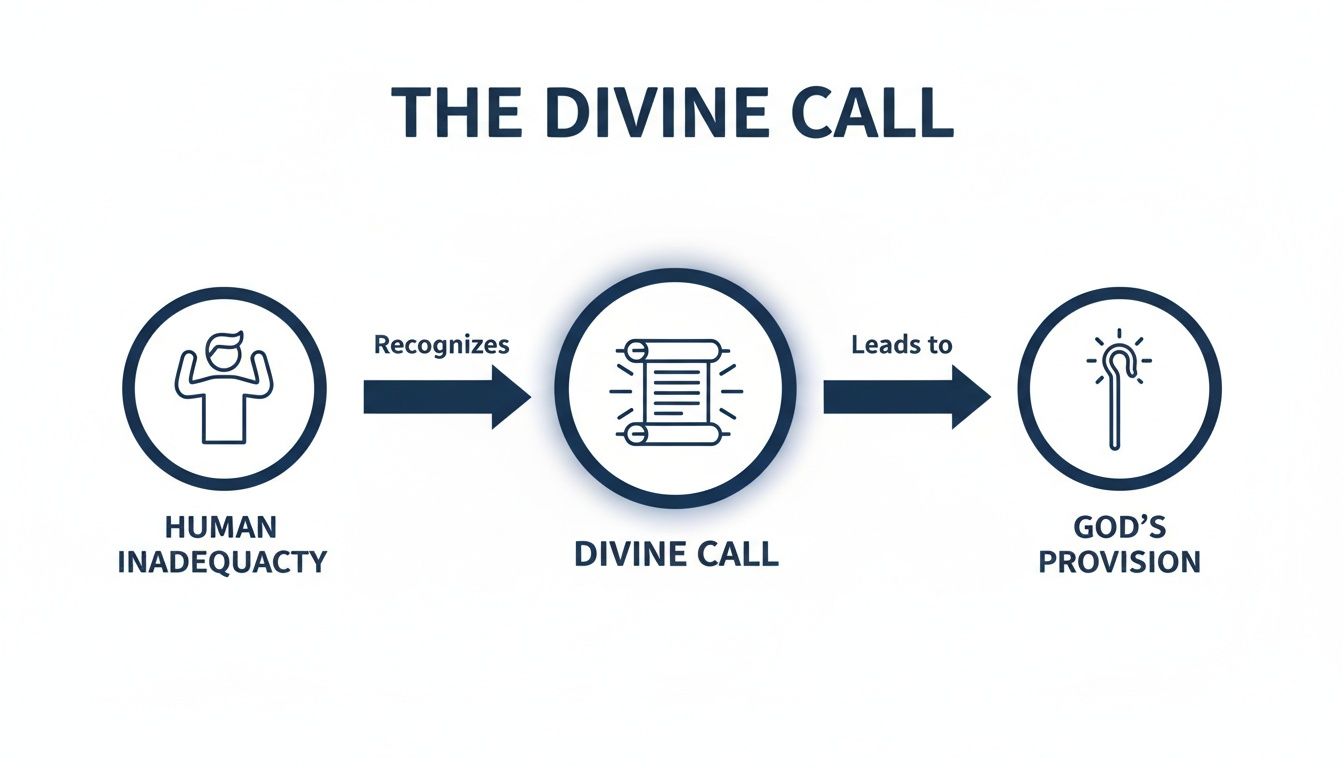
This process shows that God's provision is the direct answer to our feelings of inadequacy when we finally respond to His call. The three signs given to Moses are a perfect demonstration of this divine provision in action.
The Staff, The Hand, and The Water
Each of these signs carried specific symbolic weight that would have been immediately understood by the Israelites and, eventually, by Pharaoh himself.
The Staff Becomes a Serpent (Exodus 4:2-5): The serpent, especially the cobra (the likely meaning of the Hebrew nachash here), was a potent symbol in Egypt. It stood for royalty and divine authority, appearing on the Pharaoh's crown as the uraeus. When Moses' simple shepherd's staff—an emblem of his humble life—transforms into a serpent, God makes a stunning statement: His power is superior to the authority of Pharaoh. He seizes a symbol of Egyptian might and bends it to His own will.
The Leprous Hand (Exodus 4:6-8): Next, God instructs Moses to place his hand inside his cloak. When he pulls it out, it's leprous, "white as snow." When he does it again, his hand is fully restored. This sign demonstrated God's absolute command over life, disease, and purity. He is the one who can afflict and the one who can heal, a power far beyond any Egyptian magician or deity.
The Water Turns to Blood (Exodus 4:9): The third and final sign was a direct challenge to the gods of Egypt. The Nile River was the source of all life for Egypt and was personified by the god Hapi. By turning its water into blood, God showed His total sovereignty over the very heart of Egyptian existence. This sign served as a grim foreshadowing of the devastating plagues that were still to come.
This back-and-forth between Moses and God reveals a critical pattern of divine commissioning. Here is a quick breakdown of Moses' five objections throughout this encounter and God's patient, powerful responses.
Moses' Objections and God's Divine Responses in Exodus 4
Objection of Moses (Verse Reference) | The Core Concern | God's Divine Response (Verse Reference) |
|---|---|---|
1. "They will not believe me." (4:1) | Lack of credibility; fear of rejection. | Provides three powerful, validating signs (staff, hand, water). (4:2-9) |
2. "I am not eloquent." (4:10) | Perceived personal inadequacy; speech impediment. | "Who has made man's mouth?... I will be with your mouth and teach you." (4:11-12) |
3. "Oh, my Lord, please send someone else." (4:13) | Outright refusal; deep-seated unwillingness. | God's anger is kindled, but He still provides Aaron as a spokesman. (4:14-16) |
4. "What shall I do with the elders of Midian?" (Implied in 4:18-19) | Concern for existing responsibilities (Jethro's flock). | Reassures Moses that those who sought his life are dead. (4:19) |
5. Fear of Pharaoh (Implied in 4:21) | Fear of confronting the most powerful man on earth. | Promises to harden Pharaoh's heart, showing His ultimate control. (4:21) |
God patiently addressed every single one of Moses' fears, providing not just reassurance but tangible proof of His power and presence. These signs were specifically designed to overcome the deep-seated skepticism of a people who had not seen a direct appearance from God in 430 years. And they worked. Once Aaron performed them, the people believed God had visited them in their affliction, and they worshiped.
The Humility of a Reluctant Prophet
Moses’ string of excuses in Exodus 4 teaches us something vital about godly leadership. It’s easy to look at his reluctance and see it as a disqualifying weakness. But what if it’s actually a sign of profound humility? This is where our Exodus 4 commentary really digs in, especially when Moses famously objects, “Oh, my Lord, I am not eloquent… I am slow of speech and of tongue” (Exodus 4:10, ESV).
In the ancient world—and today as well—eloquence was seen as a key trait for any real leader. You were expected to be a powerful, persuasive speaker. Moses admitting he's not good with words completely flies in the face of that cultural standard. It highlights a beautiful paradox we see all over Scripture: God often chooses the seemingly unqualified to accomplish His greatest works so that He alone receives the glory.

God’s Response to Human Weakness
God’s answer to Moses is two-fold. First, He reminds Moses who is really in charge with a series of powerful rhetorical questions: “Who has made man’s mouth? Who makes him mute, or deaf, or seeing, or blind? Is it not I, the LORD?” (Exodus 4:11, ESV). This is a foundational truth for anyone stepping into ministry. God is the one who made our strengths and our weaknesses, and He's more than capable of working through both.
Second, God offers practical help. He doesn’t just tell Moses to get over it. Instead, He gives him a partner, appointing his brother Aaron to be his spokesman. This is an incredible act of grace, showing God’s compassion for Moses' very real fear. He understands the anxiety and provides the support needed to obey. This directly challenges modern leadership ideals that so often prize charisma and self-confidence over a humble, moment-by-moment reliance on God.
The narrative in Exodus 4 spells out Moses' initial pushback, documenting several specific objections that still feel incredibly relevant to leadership challenges today. He voiced at least four major concerns, from his fear that the Israelites wouldn't believe him after 430 years of divine silence to his deep-seated anxiety about his public speaking. This pattern of divine reassurance through multiple signs is a consistent feature in major Old Testament commissioning stories. Most commentators emphasize that Moses' humility and self-awareness, far from disqualifying him, perfectly positioned him for the immense task ahead.
Redefining Strength in Leadership
This entire exchange serves as a powerful model for spiritual formation, which is a core component of the training we provide here at The Bible Seminary. We believe that true leadership strength isn’t found in personal giftedness but in a deep, abiding dependence on Christ.
God’s power is made perfect in weakness. When we acknowledge our limitations, we create space for His strength to shine through. The most effective leaders are not those who are most qualified, but those who are most surrendered.
This principle is essential for anyone considering a life of service. It’s a theme explored deeply in the study of ministry and spiritual leadership. For those looking to understand how this humble reliance on God shapes a minister's life and work, you may be interested in our guide on what pastoral theology is.
The story of the reluctant prophet is a timeless reminder that God isn't looking for perfect people; He's looking for willing hearts. Moses’ journey from crippling doubt to faithful obedience proves that God's call is never about our ability, but always about His. He equips, He provides, and He empowers.
The Shocking Encounter on the Journey to Egypt
Just when you think the narrative is moving forward—Moses finally commits and starts the long trek back to Egypt—the story slams on the brakes with one of the most jarring and perplexing passages in the entire Pentateuch. On the way, at a lodging place, the text says the LORD “met him and sought to put him to death” (Exodus 4:24, ESV).
This brief, almost cryptic, encounter is staggering. Why would God, who just spent the better part of a chapter commissioning, convincing, and equipping Moses, suddenly turn on his chosen messenger? The key to unlocking this shocking moment is found in one of the Bible’s central themes: covenant faithfulness.
A Matter of Covenant Obedience
The clue is right there in the context. God's covenant with Abraham, laid out in Genesis 17, demanded circumcision as the non-negotiable physical sign of belonging to His people. For Moses, the man chosen to deliver this very covenant nation, to have neglected this foundational command for his own son was a grave offense. It was a blatant act of disobedience at the very heart of his identity and mission.
This passage is a stark reminder that God holds His chosen leaders to the highest standard. Moses simply could not lead God's people into covenant faithfulness while living in personal disobedience to that same covenant. Before he could ever hope to confront Pharaoh, he first had to get his own house in order.
Zipporah’s Decisive Action
In this moment of life-or-death crisis, it’s not Moses but his wife, Zipporah, who acts with stunning speed and resolve.
“Then Zipporah took a flint knife and cut off her son's foreskin and touched Moses' feet with it and said, ‘Surely you are a bridegroom of blood to me!’ So he let him alone. It was then that she said, ‘A bridegroom of blood,’ because of the circumcision.” - Exodus 4:25-26 (ESV)
Zipporah’s quick thinking saves her husband. She performs the rite that Moses had failed to perform, and in that moment, God’s judgment is turned away. Her words, “Surely you are a bridegroom of blood to me,” are raw, intense, and dripping with meaning. She recognizes that this bloody act of obedience has just preserved her husband’s life and restored their family to a right relationship with God. The blood of the covenant sign was required to avert death.
This strange incident has been central to seminary education for centuries, with both Jewish and Christian traditions using it to teach the immense importance of covenant obligations. While the text is ambiguous, much contemporary academic study suggests Gershom, the son, may have been the primary target of the threat. Crucially, theological commentaries universally recognize the connection between the blood of circumcision in this story and the blood of the Passover lamb that would soon save Israel’s firstborn. You can learn more about the scholarly discussions on this difficult passage from the St. Paul Center.
A Prerequisite for Ministry
This dramatic episode powerfully illustrates a foundational principle we emphasize in the ministry training we provide at The Bible Seminary. Before we can lead others effectively, our own lives must be aligned with God’s commands. Obedience isn’t just a good idea; it is the absolute prerequisite for effective service in God’s kingdom.
Moses was being prepared to be a mediator of God’s covenant, and this terrifying encounter ensured he understood the absolute seriousness of that covenant’s demands. It was a painful but necessary lesson, purifying the messenger before he could deliver God’s message. This story reminds every leader, then and now, that personal faithfulness is the bedrock upon which all public ministry must be built.
How Aaron's Partnership Validated the Mission
After the intense, private struggles of Moses—from his nagging doubts at the burning bush to that shocking, near-fatal encounter with God on the road—the final section of Exodus 4 pivots to public action. This is the moment the mission moves from one man's internal turmoil to a community's first spark of hope. God's promise to provide a helper finds its fulfillment as Moses and his brother, Aaron, finally come face to face.
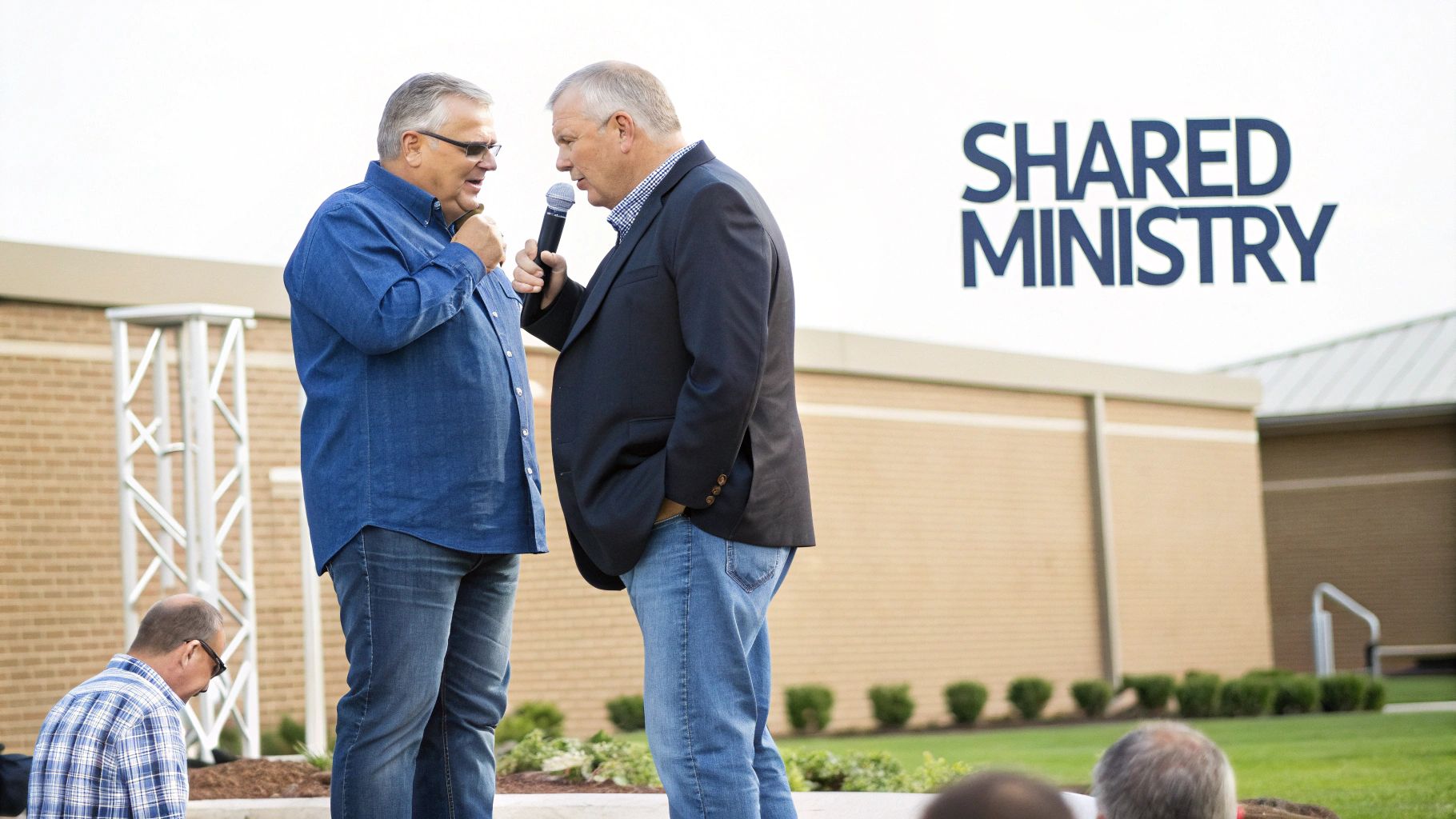
This reunion is a powerful model for shared ministry. God had already told Moses that Aaron was on his way, promising that “when he sees you, he will be glad in his heart” (Exodus 4:14, ESV). You can almost feel the relief. This isn't just a family get-together; it's a divine appointment. It's the formation of the leadership team that will go toe-to-toe with the most powerful empire on earth. Moses, the hesitant prophet, shares everything—all the words and signs God had given him—and Aaron steps right into his role as the mouthpiece.
Gathering the Elders
The brothers waste no time. Their first move is to assemble the elders of Israel. This was a critical first step, showing deep respect for the established community leadership and inviting their buy-in from the start. It was a savvy move, signaling that this wasn't some rogue operation but the fulfillment of God’s covenant promises to the whole nation.
Then Moses and Aaron went and gathered together all the elders of the people of Israel. Aaron spoke all the words that the LORD had spoken to Moses and did the signs in the sight of the people. Exodus 4:29-30 (ESV)
Aaron, true to his assignment, delivers God’s message with both clarity and authority. He doesn’t just repeat the words; he performs the signs God had given Moses. The staff becomes a serpent. The hand turns leprous, then clean again. These weren't magic tricks. They were powerful, visual sermons proving that the God of their fathers was finally on the move.
The People Believed and Worshiped
The people's reaction is the triumphant climax of the chapter and a beautiful, definitive answer to Moses’ biggest fear. His very first objection—"What if they will not believe me?"—is completely swept away.
The text records the profound outcome:
The people believed. After centuries of divine silence, God’s message, delivered by His chosen messengers and backed by His power, finally pierced through their despair.
They understood God’s care. They heard that the LORD had “visited” them and “seen their affliction.” This was the assurance they desperately needed: God was not distant. He was intimately aware of their suffering.
They responded in worship. Overwhelmed by this sudden rush of hope, “they bowed their heads and worshiped” (Exodus 4:31, ESV).
This powerful conclusion offers a vital lesson for anyone in ministry today. God’s truth, when communicated faithfully and confirmed by His power, ignites genuine faith and heartfelt worship. The chapter that began with one man’s paralyzing doubt wraps up with a nation on its knees in reverence. It’s a stunning testament to how God uses obedient, collaborative leadership to bring about His purposes, equipping leaders at The Bible Seminary to do the same.
Applying the Lessons of Exodus 4 to Your Life
So, how does this ancient story of a reluctant prophet speak into our lives today? The powerful themes woven through Exodus 4 are truly timeless. For anyone seeking to follow God, this chapter offers profound spiritual truths vital for training our hearts and minds for service.
The narrative is a deep well of encouragement and practical wisdom. It's a potent reminder that our feelings of inadequacy don't disqualify us from God’s work. In fact, they often position us perfectly to rely on His strength, not our own.
Responding to God’s Call
When you sense God calling you to a new task, it's completely natural to feel just like Moses did. We immediately focus on our weaknesses, don't we? Our lack of eloquence, our past failures, our fear of what people will think. Moses’ journey teaches us to shift our focus from our own limitations to God's limitless power.
He reminds us that the same God who fashioned our mouths can give us the words to say. This story gives us permission to bring our honest doubts and fears to Him, trusting that He will provide the resources, the signs, and even the partners—like Aaron—we need to fulfill His mission.
Embracing Costly Obedience
That jarring, almost shocking, incident with Zipporah and the circumcision serves as a sobering reminder about the non-negotiable importance of obedience. It shows us, in no uncertain terms, that God’s leaders are held to a high standard of covenant faithfulness.
Before we can lead others, our own lives must be aligned with God’s commands. This chapter shows that personal integrity is the foundation for public ministry. It is not just a historical account but a lesson on the gravity of wholehearted devotion.
Our faith is always bolstered by God’s promises and then confirmed through His actions. If you're looking to go deeper in your own study, we have a helpful guide on how to study the Bible effectively that can strengthen your walk.
The story of Moses is a powerful testament that God always equips those He calls. If you are sensing a call to deeper biblical study or ministry, we invite you to explore how The Bible Seminary can help you on your journey.
Digging Deeper into Exodus 4
As we work our way through a chapter this rich, a few questions always seem to surface. Wrestling with these tough spots is often where the text really opens up. Let’s tackle some of the most common ones and see if we can bring some clarity to this part of Moses’ story.
Why Was Moses So Reluctant to Accept God’s Call?
Moses’ hesitation feels deeply human and relatable. His reluctance comes from a place of genuine fear and a profound sense of inadequacy. You have to remember, after spending 40 years as a shepherd in the quiet back country of Midian, he felt completely out of his depth for a mission this massive. His first response says it all: "Who am I?" (Exodus 3:11).
His concerns were layered:
Fear of Disbelief: His main worry in Exodus 4 is that the Israelites just won't believe him. After centuries of what felt like divine silence, who would believe that God had suddenly appeared to a shepherd on the backside of the desert?
Personal Insecurity: He focuses on his own shortcomings, famously telling God he is "slow of speech and of tongue" (Exodus 4:10). He couldn't see himself as a persuasive, charismatic leader.
Crushing Responsibility: The sheer weight of confronting the most powerful man on earth and leading an entire nation out of bondage was overwhelming. It’s no wonder he pleaded with God to just send someone else.
Yet, what’s fascinating is that the narrative presents his humility and keen awareness of his own limits not as disqualifying flaws, but as the very things that made him the right man for the job. He was perfectly positioned to be an instrument of God's power, not his own.
What Is the Deeper Meaning of the Three Signs?
The signs God gave Moses weren't just random acts of magic; they were powerful, theologically loaded statements designed to dismantle the Egyptian religious worldview piece by piece.
These signs were essentially visual sermons, crafted to prove God's absolute authority over the very symbols of Egyptian power and life. They served a dual purpose: to validate Moses’ message to the Israelites and to show them that their God’s sovereignty was completely unmatched.
The Staff to Serpent: This was a direct shot at Pharaoh's authority. The serpent, especially the cobra (uraeus), was a potent symbol of royalty and divine power in Egypt, famously worn on Pharaoh's crown. By turning a common shepherd’s staff into a serpent, God was making a clear declaration: His power was supreme over Pharaoh’s.
The Leprous Hand: This miracle was a demonstration of God's ultimate authority over human life, health, and ritual purity. God alone held the power to both afflict and to heal, a power far beyond the reach of any Egyptian deity or court magician.
Water to Blood: This sign was a direct assault on Hapi, the god of the Nile, who was credited with being the source of Egypt's life and prosperity. It proved that the God of Israel controlled the very lifeblood of Egypt, powerfully foreshadowing the plagues that were to come.
Why Did God Confront Moses on His Way to Egypt?
The shocking and abrupt encounter where God "sought to put him to death" (Exodus 4:24) is one of the most jarring moments in the Pentateuch. But it’s directly connected to covenant faithfulness. Back in Genesis 17, God established circumcision as the non-negotiable physical sign of His covenant with Abraham and his descendants.
Somehow, Moses—the man chosen to lead God's covenant people—had neglected this foundational command for his own son. The incident is a stark reminder of the absolute seriousness of God's commands and the high standard of obedience required from His chosen leaders. It was Zipporah's quick, decisive action in performing the circumcision that resolved this critical covenant failure, allowing the mission to continue. It serves as a powerful lesson that personal faithfulness is the non-negotiable foundation for public ministry.
At The Bible Seminary, we are passionate about digging into these challenging passages where Scripture truly comes alive. This is how we equip leaders to understand God's Word with confidence and clarity, preparing them to impact the world for Christ.
If you’re ready for a deeper level of biblical training, we invite you to explore our degree programs at The Bible Seminary.
