
Crafting a Job Description for an Executive Pastor That Attracts Kingdom Leaders

A solid job description for an executive pastor is more than a list of duties—it's the blueprint for the operational heart of your church's mission. It spells out who will translate the Senior Pastor's vision into actionable strategy, managing the staff, the budget, and the day-to-day operations that help a church truly flourish for the glory of God. For any healthy, growing congregation, this role is absolutely vital.
The Biblical and Strategic Foundation of the Executive Pastor

Before you write the first bullet point, it's essential to grasp the why behind the Executive Pastor (XP) role. This isn't just a corporate idea imported into the church; it reflects a timeless, biblical principle of shared leadership. We see this model as early as Exodus 18, when Jethro gives his son-in-law Moses incredibly wise counsel: delegate, or you will burn out.
"You and the people with you will certainly wear yourselves out, for the task is too heavy for you; you cannot do it alone." (Exodus 18:18, CSB)
That ancient wisdom speaks directly to pastors today. The Senior Pastor bears the immense weight of spiritual leadership—preaching, prayer, and core pastoral care. The Executive Pastor comes alongside as the operational leader, ensuring the vision is supported by healthy systems and solid structures.
To bring clarity to this dynamic, here's how the roles complement each other:
Executive Pastor Role At A Glance
Area of Focus | Executive Pastor (The 'How') | Senior Pastor (The 'Why' and 'What') |
|---|---|---|
Vision & Strategy | Executes the vision by developing operational plans, systems, and metrics. | Casts the vision, sets the theological direction, and defines ministry priorities. |
Leadership | Leads staff, oversees day-to-day operations, and manages ministry execution. | Provides spiritual leadership, shepherds the congregation, and leads the board/elders. |
Ministry Focus | Focuses on administration, finance, HR, facilities, and strategic implementation. | Focuses on preaching, teaching, pastoral care, prayer, and discipleship. |
Primary Question | "How will we accomplish the vision?" | "Why are we doing this?" and "What is God calling us to do?" |
This table helps leadership teams and candidates see where the lines are drawn, ensuring everyone is pulling in the same direction but in their distinct, God-given lanes.
Understanding the Modern Ministry Context
The Executive Pastor role has become increasingly common for a simple reason: churches are more complex than ever. This leader functions much like a Chief Operating Officer (COO), bringing the administrative strength needed to support expanding ministries. As a church grows, so do the operational challenges, and you need specialized leadership to handle them well.
This is why getting the job description right is so critical. Think of it less as an HR document and more as a theological statement about your church's commitment to good stewardship and effective ministry. It sends a clear message that you value both spiritual vision and operational excellence.
When you clearly define these roles, you honor the different gifts God gives to leaders in the Body of Christ. You can explore different ways to structure this in our guide on choosing a church leadership structure. Getting this clarity upfront sets the stage for finding a leader who is truly equipped to help your church make its greatest kingdom impact.
Outlining Core Responsibilities and Duties

With the biblical foundation laid, it's time to get specific by spelling out the duties and responsibilities in your executive pastor job description. This is where the strategic purpose of the role gets translated into tangible, mission-focused actions.
We have found it’s incredibly helpful to organize these duties into distinct categories. This simple step brings clarity for your leadership team and gives potential candidates a much clearer picture of the role. It’s the difference between a generic list of tasks and a compelling vision of a leader stewarding the church's resources and people with skill and wisdom.
Strategic and Visionary Leadership
This is where the Executive Pastor (XP) partners with the Senior Pastor to turn vision into reality. The work here is big-picture and forward-thinking. It’s all about the long-term health and direction of the church, ensuring every operational gear turns in sync with the mission of Christ.
Action-oriented responsibilities for this area could look something like this:
Collaborate with the Senior Pastor and elders to forge and execute the church's strategic plan.
Translate the church’s vision into concrete annual ministry objectives and measurable goals across all departments.
Oversee major ministry initiatives from concept to completion, ensuring they remain true to our mission.
Staff Development and Team Leadership
A great Executive Pastor is a leader of leaders. Their job isn’t just to manage staff—it’s to shepherd them. They are the chief architect of a healthy, unified team culture that empowers ministry and reflects Christ. This section of the job description should highlight the relational, pastoral side of operational leadership.
A crucial responsibility is to lead, equip, and mentor ministry staff, creating a culture of deep collaboration and genuine spiritual growth. This also means conducting regular performance reviews and carving out clear pathways for professional development, positioning every team member to flourish in their calling.
Financial and Administrative Oversight
This category holds the nuts-and-bolts stewardship of the resources God has given your church. Clarity here is non-negotiable. The Executive Pastor is the operational backbone, managing the daily functions so the Senior Pastor can stay focused on preaching, teaching, and spiritual direction.
This almost always includes overseeing a wide range of church operations. To see common threads across churches, you can scan some of the typical XP duties listed on Indeed.com.
Here are some core functions:
Develop and manage the annual church budget alongside the finance committee and ministry leaders.
Ensure sound financial practices are in place, overseeing everything from accounting and contributions to financial reporting.
Oversee all church administration, including facilities management, IT infrastructure, and legal compliance.
When you carefully outline these duties, you craft a job description that honors both the spiritual calling and the practical skills this essential role demands. You’ll find you attract candidates who aren’t just capable managers but are truly ready to lead with a servant’s heart.
Pinpointing Essential Qualifications and Competencies
Once you've mapped out the core duties, the next crucial step is defining the qualifications and competencies you're looking for. This goes beyond a simple checklist; it's about painting a picture of the person God is calling to this vital role—a leader whose heart, mind, and skills are aligned for kingdom service.
This isn't just about finding someone who can do the job. It's about discerning the specific blend of education, hands-on experience, and spiritual maturity needed to thrive in your unique church context.
Educational and Professional Foundations
First, you need to outline the non-negotiable academic and professional background. This sets a clear baseline for the level of expertise required to navigate the complexities of a growing ministry.
Formal Education: A seminary degree is often essential. A Master of Divinity or a Master of Arts in a relevant field signals that a candidate has deep biblical and theological grounding. This isn't just about academics; it's about ensuring leadership is rooted in sound doctrine. Here at The Bible Seminary, we focus on training hearts and minds for kingdom service.
Proven Experience: You are looking for a demonstrated track record of leadership in a similar context. Think in terms of 5-10 years of experience in church administration, non-profit management, or another senior leadership role. A strong candidate will have a history of successfully managing staff, stewarding budgets, and seeing strategic plans through to completion.
For helpful context on this role, you can read insightful analysis from ministry experts.
Essential Ministry Competencies
Degrees and resumes only tell part of the story. You are really looking for specific, God-given competencies—the skills and character traits that allow an XP to truly lead, not just manage.
These are the abilities that separate a good administrator from a great ministry leader:
Strategic Thinking: The capacity to see the big picture, anticipate future needs, and connect day-to-day operations to the church's long-term vision.
Servant Leadership: A genuine heart to empower and equip others. This looks like humility in action, prioritizing the health of the team and congregation above personal ambition. You can read more about this in our discussion on what pastoral theology means for ministry.
Financial Acumen: A rock-solid understanding of church finance, budgeting, and biblical stewardship principles. They need to be as comfortable with a spreadsheet as they are with Scripture.
Conflict Resolution: The wisdom and grace to navigate the inevitable interpersonal challenges that arise, fostering unity within the staff and the broader church family.
By clearly distinguishing between what is required (like a seminary degree) and what is preferred (like experience in a specific denomination), you cast a wider net. This approach helps you attract a diverse pool of qualified candidates while still ensuring you find a leader who is genuinely equipped to make a lasting impact.
Structuring Your Job Description for Impact

A disorganized job description can discourage the very leaders you hope to reach. Crafting this document with clarity and a thoughtful structure isn't just professional—it's an act of stewardship. You're honoring a candidate's time and painting a compelling picture of where they might fit into God's work at your church.
The goal is to create something that's both informative and inspiring. It needs to be easy to skim, letting a busy ministry professional quickly see the core of the role. But it should also draw them in, giving them a real sense of your church's heart and mission. Let’s walk through the essential pieces that make that happen.
Building Blocks of a Compelling Description
Think of your job description like telling a story. Each section should build on the last, giving a progressively clearer picture of the opportunity. A well-organized document shows respect for the candidate and reflects the intentional, orderly nature of your ministry.
We believe this flow works exceptionally well:
Clear Job Title: Keep it simple: "Executive Pastor." Avoid confusing corporate titles that might muddy the waters.
Church Mission & Vision: Briefly share the heart of your church. What is your unique calling? This grounds the entire role in a deeper purpose.
Role Summary: In 2–3 powerful sentences, capture the essence of the position and its primary contribution to the mission.
Reporting Structure: Make it crystal clear who the Executive Pastor reports to (usually the Senior Pastor) and which roles report to them.
Core Responsibilities: Use bullet points to lay out the main duties. We recommend grouping them by function—like Leadership, Finance, and Staff Development—for clarity.
Qualifications & Competencies: List the non-negotiable and "preferred" qualifications—spiritually, educationally, and experientially.
A well-structured job description is more than just a list of tasks; it’s a ministry tool. It clarifies expectations, aligns leadership, and invites the right person into a role where their gifts can flourish for the glory of God.
Formatting for Readability and Engagement
How you present the information is just as important as what you're presenting. You want key details to jump off the page, helping candidates quickly assess if the role is a potential match. A solid wall of text can be a major turn-off; smart formatting, on the other hand, is an invitation to lean in.
Of course, as you structure any job description, it's wise to consider legal compliance. For a deeper look, there are helpful resources on how to write a compliant job description that can guide you.
Your Formatting Checklist:
Use Clear Headings: Break up the text into logical sections with H2s and H3s.
Embrace Bullet Points: They are your best friend for listing responsibilities and qualifications, making everything easy to scan.
Use Bold Text: Strategically bold key phrases or requirements to draw the reader's eye to what matters most.
Keep Paragraphs Short: Aim for 2–4 sentences per paragraph. This keeps the document visually appealing and easier to digest.
Following this framework will help you create a professional, engaging, and clear job description for an executive pastor—one that doesn't just inform but also reflects the excellence and heart of your church.
Weaving Your Church’s Culture and Theology into the Description
A generic job description attracts generic candidates. A truly powerful job description for an executive pastor, however, does much more than list tasks—it breathes the very heart and soul of your church. This is your chance to step away from sterile corporate language and infuse the document with your unique theological DNA and ministry philosophy.
Think of this document as a discipleship tool first and an HR document second. It needs to clearly reflect your church’s core identity, whether you describe yourselves as Bible-based, Christ-centered, and Spirit-led or another expression of who God has called you to be. When you weave these distinctives into the job description, you begin the spiritual and cultural alignment process from the very first read.
Connecting Operations to Mission
The real art is translating operational duties into mission-focused responsibilities. It’s a subtle shift in language, but the impact is profound. This reframing shows a candidate that you see this role not just as an administrator, but as a pastoral leader stewarding the operational health of the church for God's glory.
Here are a few practical examples:
Instead of "Manage staff," try "Shepherd and develop ministry staff to fulfill their God-given callings."
Rather than "Oversee annual budget," frame it as, "Steward the financial resources entrusted to our church to maximize kingdom impact."
Instead of "Implement strategic initiatives," you could write, "Execute the Senior Pastor’s vision by building sustainable systems that support our gospel mission."
This wording naturally attracts leaders wired for both operational excellence and deep spiritual purpose. You’re signaling that you're looking for someone who understands that spreadsheets and staff meetings are sacred tools for advancing the Great Commission.
Crafting a Compelling Role Summary
The Role Summary is the perfect place to articulate this blend of practical leadership and spiritual oversight. It should capture the essence of the position in a way that resonates with a ministry-minded leader. It’s the theological "why" behind the operational "how."
For instance, a compelling summary might read: "The Executive Pastor will serve as the primary operational leader, responsible for executing the Senior Pastor’s vision by aligning our staff, finances, and ministries. This leader will cultivate a healthy and unified team, ensuring our church operates with excellence and integrity as we seek to impact our community for Christ."
This kind of intentional, theologically-rich language ensures you attract candidates who aren't just looking for another job, but are actively seeking a calling. To dig deeper into this idea of integrated leadership, you might find our article on what it means for leadership and living to intersect insightful. Ultimately, this approach helps you find a leader who is a strong cultural and theological fit for your unique church family.
Turning Your Job Description into a Hiring Plan
You’ve poured your heart and prayer into crafting the perfect executive pastor job description. That’s a huge step, but the work is just getting started. Think of that document not as a file to be tucked away, but as your strategic roadmap for the entire hiring process. It's the tool that keeps you focused, ensuring you find a leader who is not only highly skilled but spiritually aligned with your church's mission.
Your first step is to use that job description as the rubric for every application that comes in. As you review candidates, hold their experience up against the core responsibilities and qualifications you so carefully defined. This immediately injects objectivity into the process and helps the search committee stay laser-focused on what truly matters for the role.
Developing Your Interview Strategy
Next, let that job description be the blueprint for your interview questions. A great interview isn’t just a friendly chat; it’s a strategic assessment, and every question should tie directly back to a specific competency or responsibility listed in the document.
Let's get practical. Here's how you can translate the job description into powerful questions:
For Strategic Leadership: "Walk us through a time you translated a senior leader's vision into an actionable, multi-department plan. What were the specific steps you took, and what was the outcome?"
For Staff Development: "Describe your philosophy for shepherding and developing ministry staff. How do you handle underperformance in a way that is both gracious and direct?"
For Financial Oversight: Present a sample budget and ask, "How would you approach stewarding these resources to align with our church's mission? Where would you even start?"
This whole process is about moving from the abstract to the concrete—from defining what matters (your values) to how it gets done (your mission), and finally, to finding the right person to lead the flock (the shepherd).
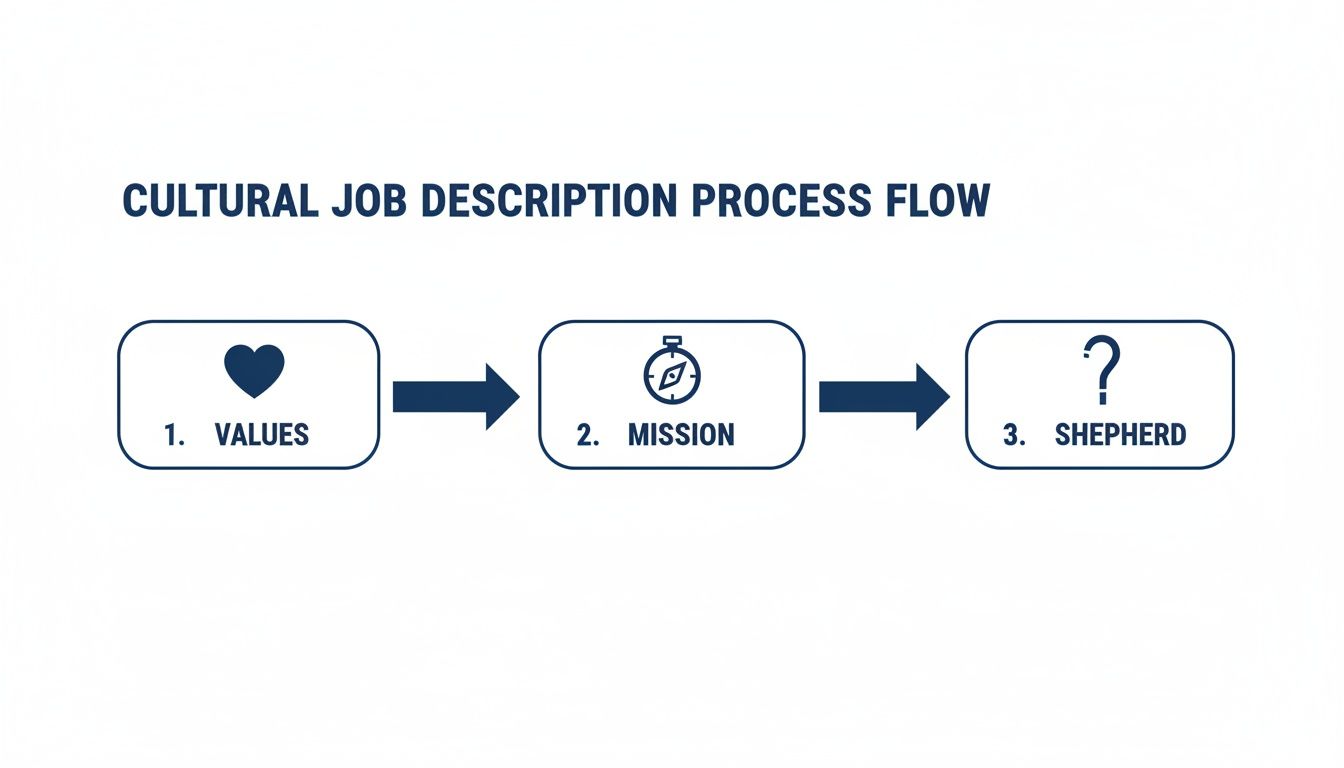
To ensure your hiring process is attracting the best possible candidates, it's worth exploring modern talent acquisition best practices. You might pick up insights that can sharpen your approach.
Ultimately, your commitment to finding the right leader reflects your commitment to the health of your church. At The Bible Seminary, we share that passion deeply. We are dedicated to equipping leaders to impact the world for Christ.
Answering Common Questions About the Executive Pastor Role
As church leaders explore adding an executive pastor, a few key questions almost always come up. Drawing from years of ministry experience and biblical principles, here are some practical, hope-filled answers to help you navigate this important decision.
At What Church Size Should We Hire an Executive Pastor?
While there isn't a magic number, many ministry leaders find it's time to seriously consider an XP when attendance consistently hits 500–800 people.
The reason is that around this size, the complexity of operations—from finance and HR to facility management and staff development—often starts to overwhelm the Senior Pastor's capacity. The goal is to get ahead of the curve. You want to hire an XP before the operational strain begins to slow down your ministry impact.
What Is the Difference Between an Executive and an Associate Pastor?
The biggest distinction comes down to focus. An Associate Pastor is typically a specialist, overseeing a specific ministry area like discipleship, youth, or outreach. They are experts in their ministry lane.
The Executive Pastor, on the other hand, is a generalist with a much broader scope. They oversee the entire operational side of the church, managing staff and systems to bring the Senior Pastor's vision to life. You could say the XP is the 'how' behind the Senior Pastor's 'what' and 'why.'
Does an Executive Pastor Need to Be Ordained?
This is a question that depends on your church's specific polity and theological convictions. Many churches do require ordination because they view the XP as a core member of the pastoral leadership team, one who might need to provide spiritual oversight, counsel, or even preach on occasion.
Others place a higher premium on proven leadership and management skills, seeing the role as primarily operational. In the best-case scenario, you find a candidate who brings both spiritual maturity and sharp operational expertise. We always encourage robust theological training to ensure leaders are equipped with biblical wisdom and a shepherd's heart.
At The Bible Seminary, we are committed to training leaders for every area of ministry. Our programs unite deep biblical scholarship with practical application to equip you for kingdom service.
Explore our degree programs and begin your journey toward deeper ministry training today at https://www.thebibleseminary.edu.